



Monday, August 06 2012
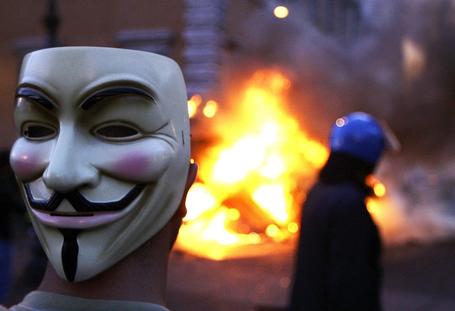


While I know the original history of Guy Fawkes, I seriously doubt most of the protestors using his image know who he was, which means that this is a meme that has its modern origin in V for Vendetta.
Posted by: Civilis at
07: 30 PM
| Comments (1)
| Add Comment
Post contains 131 words, total size 1 kb.
Wednesday, July 11 2012
The government sucks at producing things efficiently. Because you don't have a choice about how much to give them, they don't compete for your money and work to make sure they provide a service that is worth the money you give them. The reason I'm not a complete libertarian is that I recognize there are things only the government can do due to scale, complexity, and uniqueness factors, such as build and maintain a road network (although they can, should and do contract out individual portions of the construction and maintenance on a competitive basis, I'm talking about the total system), run a justice and legal system, and kill Nazis and terrorists.
Consumption, in total among the whole population, is limited by production. You can't consume what isn't produced. Since government production is inefficient, having the government produce things results in a net loss of production than if the same resources were used privately. If you redistribute money, you redistribute consumption for the same production, so there are always winners and losers. To boost the economy, you need to increase production, so people get more things they want. Relying on the government to spend our way out of economic problems doesn't work.
Posted by: Civilis at
09: 23 PM
| No Comments
| Add Comment
Post contains 329 words, total size 2 kb.
Thursday, July 05 2012
Posted by: Civilis at
08: 29 PM
| No Comments
| Add Comment
Post contains 8 words, total size 1 kb.
Wednesday, June 20 2012
The horror story presented about the raid, the 11-year old girl traumatized and handcuffed, is indeed horrible, but it's horrible because the raid was unjustified. I would be happy if no innocent 11 year-olds ever ended up with a gun held to their heads ever again. But it's not that simple; the law enforcement agents didn't know who was in the house. I grant law enforcement some degree of leeway with regards to safety in the conduct of operations where there is an expectation of an armed suspect. The normal conduct of a law enforcement raid will probably be traumatic, and we can't expect law enforcement to never make mistakes.
However, the mistakes made here were avoidable. While no-knock raids have their place, using such a potentially dangerous tactic should require as much care as possible, and should only be used as a last resort. The limited evidence on which this raid was based should be enough to rule out the use of the tactic.
Compounding the situation is the poor quality of the follow-up, both in the field and afterwards. If the raid had been properly planned, it would have been obvious that a mistake had been made. It shouldn't have taken two hours to determine that the Avina family was not the suspect they were looking for. Further, it's obvious that mistakes were made. The fact that there doesn't seem to be any effort made to determine what went wrong and examine the use of no-knock tactics.
Looking at what happened through a simplified quality process (plan what you're going to do, do it, verify to make sure that it was done right, and use the feedback to improve the process), it's obvious that the 'do it' section is the only section that was handled reasonably well. Focusing on what was done that seems horrible in retrospect without looking at why it was done and how to fix it is a guarantee that further avoidable mistakes will be made.
Posted by: Civilis at
09: 42 PM
| No Comments
| Add Comment
Post contains 374 words, total size 2 kb.
Monday, June 18 2012
Posted by: Civilis at
07: 59 PM
| No Comments
| Add Comment
Post contains 30 words, total size 1 kb.
Wednesday, June 06 2012
Soldiers, Sailors and Airmen of the Allied Expeditionary Force!
You are about to embark upon the Great Crusade, toward which we have striven these many months. The eyes of the world are upon you. The hopes and prayers of liberty-loving people everywhere march with you. In company with our brave Allies and brothers-in-arms on other Fronts, you will bring about the destruction of the German war machine, the elimination of Nazi tyranny over the oppressed peoples of Europe, and security for ourselves in a free world.
Your task will not be an easy one. Your enemy is well trained, wellequipped and battle hardened. He will fight savagely.
But this is the year 1944! Much has happened since the Nazi triumphs of 1940-41. The United Nations have inflicted upon the Germans great defeats,in open battle, man-to-man. Our air offensive has seriously reduced their strength in the air and their capacity to wage war on the ground. Our Home Fronts have given us an overwhelming superiority in weapons and munitions of war, and placed at our disposal great reserves of trained fighting men.The tide has turned! The free men of the world are marching together to Victory!
I have full confidence in your courage and devotion to duty and skill in battle. We will accept nothing less than full Victory!
Good luck! And let us beseech the blessing of Almighty God upon this great and noble undertaking.
Dwight D. Eisenhower
more...
Posted by: Civilis at
08: 27 PM
| No Comments
| Add Comment
Post contains 386 words, total size 3 kb.
Monday, June 04 2012
Finished? One of the reasons I've always admired Scalzi's SF writing in that he generally doesn't hit you over the head with his politics; while it's there, it's generally not getting in the way of the story. While I disagree with many of his political opinions, I respect his opinions as sound and well thought out.
...with the exception of that article I just asked you to read. It's an attempt to simplify a complicated and divisive issue, and then represent it with an analogy. Simplifying a complex issue is hard; almost all writers will tend to lose the nuances of their opponent's arguments. Analogizing even a simple argument is also hard, as analogies by their nature are imperfect. Analogizing a complex argument is almost impossible.
The place where arguments by analogy tend to fail fastest is in places where the analogy isn't specific enough. Scalzi's analogy is 'In the role playing game known as The Real World, "Straight White Male†is the lowest difficulty setting there is.' Scalzi avoids the easy traps by enumerating that this is a generalization; specific results may vary. He also limits his area of interest to the US and/or the Western World, which is probably a fair limit.
Where he sinks his argument is that he never explains how the difficulty settings work beyond
First, in most games you gain points for accomplishing things. Saving the princess, for example, or clearing to the next level. A good real-world example of accomplishing things might be 'graduating high school' or 'graduating college' - fixed, unique milestones that come with specific power increases.
Second, many games give you points for accumulating treasures along the way to the larger milestones. In the real world (as in many video games) this treasure is called 'money'.
Third, some games give you points for just surviving. The longer you survive, the more points you get. Normally, these games get more difficult the longer they progress, but you generally want to continue playing the game as long as possible. In the real world, we call this aging.
Scalzi has a point, in that in all three categories 'Straight White Male' beats 'Gay Minority Female' for average final score. But there's a massive 'but' lurking there.
To cut away from the video game analogy for a bit, and on to the RPG character creation analogy. Since I don't have a choice in what class I play in the game, I roll up my character randomly and end up with a cleric (we're playing old school D&D). My friend the power gamer tells me I'm lucky, as the versatile spell casting of a cleric means that the cleric is on average more powerful than non-clerics. What's not to like? I then look over at the power gamer's character. I know from prior experience that the power gamer has sacrificed much to the dice god for incredible fortune (i.e. he fudges the rolls) and always has the best character class. Does he have a cleric? No. Did he lie when he said my cleric was good? No. The cleric is more powerful than the average non-cleric, so he was right. But non-cleric is a catch-all term. In the non-cleric bucket with the fighters, thieves, rangers, and bards (all puny before my divine power) there are the almighty wizards.
'Gay Minority Female' is a large bucket, especially the 'Minority' bucket. If you break 'Minority' into it's component class offerings, the 'Asian' group looks downright comparable to the 'White' group (neither of them are homogenous groups anyways, to further complicate matters). The Asian bucket, taken as a whole has higher college graduation rates, annual incomes, and life expectancy... all large components in the final score. But that's not all, the 'woman' choice has a lower annual income, but comes with a higher life expectancy and college attendance rate. Furthermore, some of that higher score in the male bucket comes with a higher risk, male players being more likely to take choices that have a higher reward coupled with a higher chance of a 'game over'. A risk-averse player (and most players are) might consider the risk of a premature game over on your only game not worth the time.
All in all, depending on how you keep score, Scalzi's simple analogy isn't so simple, and without addressing those massive caveats the whole thing falls apart under the weight of the real world. (I won't even get into the bizarre connotations of multiclassing in our analogy, how taking one level in fighter makes for a much more powerful wizard...) It's a shame, as Scalzi has a genuine point to be made, and the underpowered nature of the fighter and thief classes needs to be addressed for a balanced game. But a poorly thought out solution is likely to make the situation even worse for everyone. (Did I just accidentally turn a political missive into a rant on D&D 4th edition?)
Posted by: Civilis at
07: 15 PM
| No Comments
| Add Comment
Post contains 960 words, total size 6 kb.
Tuesday, May 22 2012
First, I got a new job, rather unexpectedly. It's a much better job... shorter commute, higher pay. It also is, normally, a lot less stressful of a job (part of that may be in the commute). There are, however, a few quirks. At my old job, I traveled fairly often. A busy day might take me to three different counties. With the new job, I don't travel nearly as often, but when I do... I think, depending on how you count it, I have a reasonable claim to three continents in a single day.
On the other hand, while work is less stressful, my pre-emptive karma has magnified my out-of-work stress considerably. There's nothing really to be stressed about, really, but for some reason I'd been increasingly stressed by things outside of work.
Anyways, things are calming down and I'm feeling much better. Hopefully, I'll have time to make real updates.
Posted by: Civilis at
07: 02 PM
| Comments (1)
| Add Comment
Post contains 163 words, total size 1 kb.
Monday, May 21 2012
*hurredly deletes spam accumulation*
I've been really busy for approximately (*checks watch*) several years now, to the point I forgot I had a blog.
And then I got to thinking... 'you know, I really should get my own blog' only for some long forgotten neurons to fire back with 'you idiot, you have a blog!'.
Anyways, new post soon.
Posted by: Civilis at
07: 53 PM
| No Comments
| Add Comment
Post contains 63 words, total size 1 kb.
Tuesday, July 14 2009
Most of that has been painting. In the past six weeks, I have painted seven Panzer IV H tanks, 2 Panthers, 1 Tiger, 2 Sturmtigers, 6 StuGs, 2 mobile AA guns, 3 AA emplacements, a battery of 15cm howitzers, 10 other German vehicles, 3 platoons of Germans with anti-tank weaponry, 3 houses, a battery of American 155mm howitzers, and an American spotter airplane.
I also found time to attend my brother's wedding, a momentous and wonderful occasion that was fun but certainly not restful.
This upcoming weekend I attend Otakon in Baltimore, MD, as I do every year. As in past years, I will post highlights and my observations as to the continuing state of anime fandom. Please stand by.
Posted by: Civilis at
08: 33 PM
| No Comments
| Add Comment
Post contains 137 words, total size 1 kb.
Tuesday, June 02 2009
My internal warning lights went on as this story progressed. I still cannot believe a high school level history class has a diorama as a final project. More importantly, when I, history buff and military modeler, made an offhand comment about plastic army men being generally World War II and not a generally accurate choice, it developed that neither parent nor child knew which war they were modeling, and who the sides were. (Yes, I know that fieldworks and entrenchments have been prominent in a number of wars, but I suspect that if the topic in a high school level history class is "Trench Warfare", that the subject is going to be World War I).
The more I think about it, the less this specific case bothers me. The son is already working part time as a field hand, is by all accounts a hard worker there (as opposed to school), and already knows more about agriculture than I ever will. But the general case, that history, already painfully scrimped when I was in school, has dropped to the level where the final project is this simple and demonstrates no knowledge of the subject at hand, is distressing.
My eventual reaction was to suggest that the son could improve his project by putting small holes in the dirt surface as shell craters, and wrapping wire around a broom handle to make model barbed wire. Simple, but effective. I am a gaming geek above all, after all.
Posted by: Civilis at
09: 03 PM
| No Comments
| Add Comment
Post contains 365 words, total size 2 kb.
Tuesday, May 05 2009
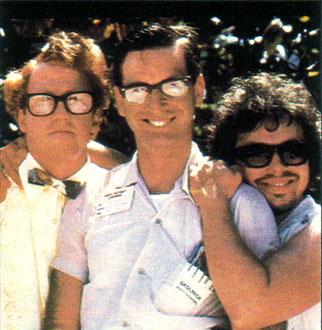
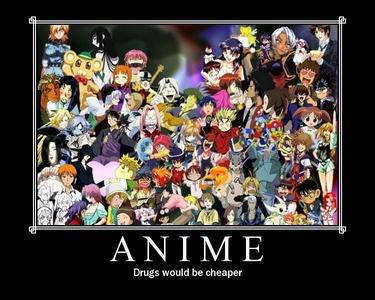
I'll start with one simple thing: My name is Chris, and I am a Geek. [Chorus of voices from the Internet, AA meeting style: "Hi, Chris!"] Moreover, I'm proud of being a geek. I spend a good portion of my free time watching Japanese Cartoons. For a while, I even blogged extensively about them (something I'd like to get back to).
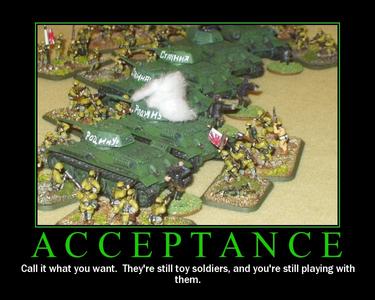
I also spend a good portion of my time building and painting miniature tanks and pushing them across a table at other miniature tanks, all while trying to resist the urge to make "rumblerumblerumble.... Bang!.... Boom!" sounds.
These are strange and abnormal hobbies, and I enjoy them a lot. I have fun. I don't have fun doing a lot of things normal people do to have fun. I can't sit down and watch normal TV shows. I can't sit down and watch sports. They bore me. I could be doing something else, something involving either scantily clad Japanese-speaking catgirls or a Kompanie of Sd Kfz 142/1 Sturmgeschutz III G assault guns.
The problem is, is that while I'm proud of this while pseudonymous on the internet, or around friends, I can't act proud of this around normal people. I automatically act to conceal it, even when such concealment is futile. It's protective camouflage. I think it originates in elementary school, when the abnormal children tend to get teased, because children are children, and they're like that. I was relentlessly bullied as I was an easy target, until fortunately I made some friends who were very hard targets and could be counted on to stand up for the weaker geeks like me.
On Monday, on Page 3 of the Washington Post Metro section, Cheryl Kravitz came out as a nerd to the world, or at least the part of the world that reads the Washington Post. In an essay titled, I Might Be a Dork, but I'll Always Sing and Dance, she explains that she realizes she's still a Nerd after all these years. Good for you, Cheryl! (The essay is online behind a registration sign-in here.)
I have a hard time discussing my hobbies and interests with co-workers, even when asked directly. I usually hem and haw, and eventually find an answer that will be technically honest and still evasive enough that my answers will pass. With movies, I can usually find a blockbuster action movie that everyone saw or at least recognizes is normal for a 30-something male to have watched. The last TV show I watched was Chuck, my interest in which was killed by the writers strike; I've seen partial episodes of the Big Bang Theory, enough to know the writers aren't real geeks. With music, I can name some edgy but relatively normal American bands. I have added a MegaTokyo poster (signed) and a couple of small anime figurines to my corner of the office, and rest of the IT department knows I have odd tastes. I can occasionally state that I'm a geek, but the listeners always blow it off with a "You're not a geek", which is my intent. I don't think being a geek is a bad thing, but I know its not easy to be different.
Some of the more astute readers will remember that I promised a political rant, and this certainly has not been the case so far. Turn back now, you have been warned.
What does this have to do with same-sex marriage? (You do remember the properly-spelled post title, right?)
On the one hand, I'm a naturally stubborn person, and don't change easily. I was raised Catholic, so to me a marriage, or at least a proper marriage will always be one man marrying one woman not closely related to him. But I recognize that others will disagree. I've also watched enough anime that different, that is to say not normal relationships don't bother me. It even predates my interests in anime; I read a lot of sci-fi while growing up. While Heinlein wrote some very good books, a lot of what he wrote is interesting, especially as it relates to sex, and if you follow Lazarus Long along as a easily influenced teenage sci-fi buff, eventually nothing fazes you. Personally, I don't care what consenting adults do in privacy. I'm defnitely in favor of extending many of the legal benefits of marriage to same sex partners, and I voted against Virginia's defense of marriage amendment on those grounds. I've personally come to favor the Italian solution... marriage is purely a religious sacrement, open to any faith's definitions, while government oversees civil partner benefits to any couple. However, if the American public votes for changing the definition of marriage, it doesn't bother me.
But for many of the participants on both sides, the debate has taken on another level, one that definitely bears on my observations on my own Geek pride. I choose to define myself as a Geek. I am a lot of other things besides, some of them potentially contradictory; I am an American, a Catholic, a Conservative, Libertarian and Classical Liberal, a Virginian, an Engineer, a Computer Expert, and many things besides. What I choose to identify myself as is my choice, and my choices come with consequences.
To some, the debate over same sex marriage is a debate (or the major battleground in the debate) over the social status of homosexuals (gays, lesbians, etc.). On one side, we have the arch-traditionalists that see any attempt at acknowledging homosexuals as the next step towards cultural depravity and anarchy, and on the other side, we have a portion of the homosexual community demanding both that they be afforded special protections and that they be respected as perfectly equal to anyone else, and that this is a right.
My rational side automatically despises the Fred Phelps of the world. As I've said, what consenting adults do in private is not my concern, and anyone that has made hating an entire class of people their way of life is abhorrent to me. I don't have a problem with despising the Westboro Baptist Church. It's easy to despise the Westboro Baptist Church. It's my other, more emotional reaction that is harder for me to rationalize, and trying to spell it out is why I'm writing this post.
My emotial reaction to the arguments for the homosexual community is both rejection and offense. For better or for worse, their self identity is tied to a behavior, specifically a sexual behavior, that is not instinctively normal for the vast majority of the population, and they are offended that people think differently of them because of this. I don't think anyone should be fired from their job merely for being homosexual (although I do believe institutions like the military that enforce a code of behavior that limits sexual activity beyond what is enforcable by law should be able to include homosexual sex in that code). But I don't think anyone should be fired from their job for being a geek, and it is legal to fire someone for being a geek. Being a geek isn't protected by law. I can't find a rational line between what is protected behavior and what isn't, and I'm offended that my self-identity group is on the wrong side of that line. I don't get any respect; why should I give in to your demands to respect you?
I don't care if you're a homosexual. Do you care if I'm a geek? Would you have a negative reaction to me if my interests came up in conversation? Am I discriminated against in society? If you said no, take this hypothetical situation: a manager is trying to determine which of two equally qualified candidates to promote, one of whom shares his non-work interests (perhaps he's a fellow fan of the local football team); is the fan more likely to get promoted, perhaps because he interacts with the manager more socially? As a geek, am I more or less likely to have an interest in common with the manager? I can't socialize with peers at work, because I have no common interests. I don't watch the latest Reality TV shows and don't follow pro or college sports. How do I network with people?
As I've said, it's an emotional reaction to an emotional issue with no right answer, and ultimately, it's a useless rant. I want to see the political issue resolved, and hopefully in a matter that leaves everyone somewhat satisfied in the short run, while the real issue, that of mutual respect for everyone, is solved in the background in the long run. But respect cannot be demanded, only earned...
Posted by: Civilis at
07: 58 PM
| No Comments
| Add Comment
Post contains 1482 words, total size 9 kb.
Monday, April 13 2009
It all started about two weeks ago, when a friend suggested going in to visit some of the museums that we hadn't been to in a while. Since I had been anting to do this at some point, I said "Sure!". Big mistake.
My friend has been a DC resident for almost a decade. I've lived here for nearly 30 years. Neither of us bothered to connect our little trip and the DC Cherry Blossom Festival which happened to coincide with that weekend. What does the Cherry Blossom festival mean? Well, it's an excuse to hold a number of Japanese or Asian themed events to commemorate the gift of a bunch of trees to the city of DC. It's an excuse for tourists to come see the events and trees. Tourists. Lots and lots of tourists. Mobs of zombie-wannabe tourists, everywhere. I joked that METRO was getting in the spirit of the festival by simulating the Tokyo subway conditions. Somehow, we made it in, and even saw some of the Museum of American History, the Museum of Natural History, and the National Gallery of Art.
While I was looking at the pretty museum exhibits, I should have been paying more attention to the other threat lurking in the city that day. I should have been wishing I had a set of NBC gear from Fallout 3. Why is the Cherry Blossom Festival held at this time of year? Because that's when the cherry blossom trees bloom. Bloom pollen. All over the place. All throughout my sinuses and lungs.
I am a complete and total wreck this week. My head throbs, my sinuses congest, and my lungs cough vile substances. Be warned, tourists, that though DC may still be a thriving city, even the supposedly prepared fall victim to its many threats...
Posted by: Civilis at
05: 27 PM
| Comments (4)
| Add Comment
Post contains 356 words, total size 2 kb.
Tuesday, March 31 2009
1. Theory always takes a backseat to reality. In theory, one can sit down with the rules of the game and devise an ideal strategy. In reality, this doesn't work, at least for most games. Any game involving luck, interaction with other players, or information only available to one of the players, can't be won by sticking to the theory of how the game should be played. Luck doesn't follow rules, and player interactions are player-specific knowledge are matters of psychology.
2. Not every battle can be won, and not every battle is worth winning. A major lesson of wargaming, is that you have to pick and choose your fights. Sometimes, you will run into a battle where one of your forces meets an overwhelming enemy force that you cannot stop. If you can recognize this, you can save some of your forces, or otherwise use the defeat to your advantage. A more important distinction is recognizing a battle that you can win, but only at a cost that you can't effectively afford in the long run; a Pyrric victory. (Although I'm using wargaming analogies here, you can substitute money or influence or any limited and essential quantity for forces and the analogy still works).
3. Don't let your emotions cloud your judgement. The trap in number two is that if you are emotionally invested in winning, then you have more difficulty recognizing losing battles or too-expensive victories. It's easy to fall for the flaw of emotionally investing in a bad strategy. If one of your opponents scores an impressive victory over you, it's easy to get emotionally committed into getting back at them, even if it's a losing proposition, or a distraction from your ultimate objective, winning the game. If you can recognize when other players in the game have switched over to emotional behaviors, you can use it to your advantage, such as tempting them into going for too-expensive victories.
4. Always know your victory conditions, and know the different ways to achieve them. Remember what your final goal is, and don't get fixated on one particular plan. It's easy to get so focused on a particular plan for achieving victory that you don't notice that you don't have the resources to pull it off. It's easy to fall into the trap of assuming that a particular battle is the only route to victory.
5. The game isn't always fair. Know that the game and the other players punish and reward certain behaviors, and plan accordingly. Take advantage of it when you can, and don't waste your energy struggling against it when you can't change it.
Why did I call this "Let's Try This Again"? Because, ultimately, I'm working on a more thoughtful look at the current conservative blogosphere slug match I alluded to down below, which is a microcosm of the conservative web presence as a whole.
We've got two prominent conservative bloggers and their readers after each other. One's trying to be diplomatic with the left, and one's taking an aggressive tone. The aggressive blogger has rightly pointed out that playing diplomatically cedes much of the terms of discourse to the progressive side, and hasn't helped in the past; the progressives have won by being nasty and playing dirty with conservatives. The diplomatic blogger has pointed out that aggressive rhetoric turns off many people we might be able to persuade, and serves only to rally those already on our side. Which one's right? Both are, or neither are.
Yes, the progressive media has unfairly demonized the right for years. Yes, they've used every nasty trick in the book. Yes, this isn't fair (Rule 5). Responding in kind isn't going to work at this time. The constant demonization of conservatives has already worked. "Conservative" is now tied to "Evil" in many people's minds. In theory, we're right (Rule 1), but this means nothing in reality, where things are shaped by people's perceptions, which have been carefully steered by the media. We can't just say "Progressives are evil", because if we do, the people we're trying to reach are going to ignore us. Yes, this isn't fair (5 Again). We need to persuade people that we're in the right, and starting with emotional arguments that immediately turn them off to our message (like "[insert Progressive politician's name here] is Evil") won't work; they voted for the guy, of course they're not going to accept our claim that his policies are harmful just on our say so! Fighting the battle of language is a difficult proposition, and one that will take a lot of work. Unless we give it our full effort, it's probably a losing battle.(Rule 2).
With regard to the Conservative bloggers, the policy disagreements have escalated into emotional disagreements (Rule 3), and the bloggers are spending time and effort to fight each other because they have an emotional stake in beating the other guy. It's led both to make stupid mistakes which infuriate the other side even more, escalating the tensions further. More importatntly, defeating the other conservative blogger doesn't help enact conservative policies and conservative politicians (Rule 4).
Posted by: Civilis at
09: 51 PM
| No Comments
| Add Comment
Post contains 874 words, total size 6 kb.
Monday, March 23 2009
Two exceptional blogs, which shall remain nameless, have reduced themselves into a mindless feud over a series of ultimately minor debates which all come down to the question of which rules actually apply.
On the one hand, allowing observers to define what you say to suit themselves is a recipe to have the perpetually offended shut down conversation. If you can define what I said, then there's no way I can debate you, because you can always define away my statements into meaninglessness or into something that can be used against me.
On the other hand, allowing people to exclusively define what they say means that there is no way to hold people to a position. If I can redefine my position after I've stated it by claiming that your interpretation of my words is wrong and I really said something completely different. As long as I can juggle words, I can be all things to all people.
Strictly applying either rule breaks the ability to have debate. The world is full of undefinable gray areas.
More importantly, the more effort we devote to battling our allies, the harder it gets to fight our enemies.
[Rant Mode Off]
Posted by: Civilis at
08: 35 PM
| No Comments
| Add Comment
Post contains 243 words, total size 1 kb.
Tuesday, March 10 2009
Movies are great for quotes, as the way the quotes are said and the surrounding context are as much a part of the humor as the quotes themselves. Book quotes don't have that added punch, so if you're trying to look for quotes as shared context, the amount that comes from books is necessarily going to be insignificant compared to the amount that comes from movies.
My take on the problem is confusing. I'm not necesssarily interested in which quotes are important for geeks (aside from stating that everyone has forgotten Ghostbusters, which seems to be one of the top sources of random dialog quotation interruptions whenever I'm interacting socially friends). What I am interested is which ideas and concepts are important for geeks to know.
I have, again, been talked into running a RPG for a circle of friends. The setting requires some background knowledge of mythology. How much mythology do I assume my players know? I can assume that most players will know the major gods of the Greek pantheon, and their associated spheres. That doesn't take much academic knowledge; a couple of episodes of Xena should provide that much. But how much Norse or Egyptian mythology should I assume? The source doesn't really matter. When watching Monty Python and the Holy Grail, everyone laughs at the Wooden Rabbit scene. What's important is they don't need to remember the Illiad to get the fundamental joke.
I assume that most geeks will get the following 'classical' references:
1. The Greek pantheon and their associated spheres of influence, as well as prominent mythological characters.
2. Major members of the Norse and Egyptian pantheons, and a couple of major characters from the Babylonian, Hindu, and Japanese pantheons.
3. Basic Old Testament Biblical mythology: Adam and Eve, Noah, and Moses.
4. Basic New Testament mythology: Jesus, Christmas, the Apostles, Judas, basic Revelations.
5. Basic post-Biblical Christian mythology: Dante's Satan and Hell, Faust
6. The major players of Camelot: Arthur, Merlin, Excalibur (most likely in Monty Python form)
7. The basic Robin Hood legend, even if in Kevin Costner form
8. Recognize major characters and lines from Romeo and Juliet, Hamlet, and MacBeth (Shakespeare being a playwright, he writes better snappy memorable spoken dialog than most authors).
9. The basics of Stoker's Dracula, Shelley's Frankenstein, and Doyle's Sherlock Holmes.
That's what came off the top of my head. It's amazing what and where these things get referenced.
Anime fans should also know the basics of the Romance of the Three Kingdoms and the Journey to the West. It's odd, but I suspect that Biblical imagery shows up more often in anime than in modern Western geek culture. From Evangelion to Xenosaga, it's hidden in a lot of places.
Posted by: Civilis at
08: 25 PM
| No Comments
| Add Comment
Post contains 507 words, total size 3 kb.
Tuesday, March 03 2009
Right now, Iran is seriously close to building a nuclear arsenal. This is a Bad Thing. Iran may or may not use a nuclear weapon against Israel. On the one hand, the President of Iran has repeatedly said that he's going to do so. On the other hand, given that the Mullahs really run the country, he might not have the power to do so. This is a moot point. (It's not a moot point to the Israelis, of course. Iran using nuclear weapons against Israel would be a Really Bad Thing regardless of what happens afterwards.)
I'm not actually referring to that, at least in the specifics. In the general case, it's more complicated than that. We troglodyte neo-conservatives have been assured by the people that know better that deterrence will prevent Iran from using their nuclear weapons, and that deterrence is a good thing. But is it? We are stating that if Iran uses nuclear weapons, we are willing to annihilate the country of Iran. Wipe it off the map. Fuse it into glass, then polish it off with Windex. We are willing to kill 65 - 70 million people, many of them women and children, many who might not approve of their government's actions, because that's what nuclear deterrence is. And that's not talking about the fallout, or the environmental destruction.
Personally, if I was president, I don't know if I could give that order. I'd, with one action, be responsible for the deaths approximating the total casualty figures for the second world war. And what's worse is that, intellectually, I know that not being willing to push that button means that, likely, more people will die in the end. And that wavering on my ability to push the button means it's more likely that I'd have to make that terrible decision.
Recently, at mass, during the intercessions, the priest prayed for nuclear disarmament. I couldn't join in. Imagine if that prayer for nuclear disarmament was magically granted, and, poof, all nuclear weapons vanished. The first country to rebuild their arsenal wins, because they get to use them. Alright, the magic wish removes all nuclear weapons and the capacity to rebuild them, ever. Well, then, what other deterrant weapons are available? Chemical weapons are the old standby, and quite nasty, but you can't go wrong with biological weapons. The purpose is the same: guarantee that in the event of a war, your opponent can't win. A terrorist group with access to smallpox could conceivably easily beat my hypothetical 65-70 million death toll. Well, then, the magic wish removes all weapons of mass destruction, both current and all hypothetical future ones. What does war look like? What did war look like before nuclear weapons? Hark back to 1944, and tell me you'd rather be a soldier or civilian in a war zone then. War was won by the states able to mobilize the biggest population, the biggest industry, and the most morale. Nuclear weapons mean that any state, no matter how big, can still lose. It also means that loser states like Iran can opt to take their enemy with them. During that mass, I prayed instead for a world that would be safe enough for nuclear disarmament.
Iran, specifically, is a bad egg. They've turned to proxy warfare to be able to hurt a country that could wipe the floor with them in a conventional conflict. Iran with a nuclear arsenal would be able to expand their support for proxy warfare by massively increasing the threshold at which we would be willing to respond with conventional force. In the aftermath of 9/11, Afghanistan refused to hand over bin Laden, and the US invaded. Would we have invaded if Afghanistan had a small nuclear arsenal? Even if they couldn't hit the US directly, they would be able to threaten US forces in the theater, US allies and other regional targets. An Afghani government that faced defeat by the US would have no reason not to use a nuclear arsenal that it was going to lose anyways. Any president that had that happen on their watch is not going to get re-elected. And so it goes with Iran: a nuclear armed Iran would be untouchable for anything less than the use of nuclear weapons, and even a domestic democratic revolution would be a major threat to regional peace.
Posted by: Civilis at
09: 01 PM
| Comments (2)
| Add Comment
Post contains 741 words, total size 5 kb.
Thursday, February 19 2009
Last weekend, I attended Katsucon 15 in Arlington, VA. Katsucon was always the odd one out of the local anime conventions. Anime USA has always been the small local con, and Otakon has always been the big show. Katsucon was more about the social aspects of American Otakudom. It's got a higher percentage of cosplayers, for one.
It also made the Washington Post this year, on the front of the style section. Saturday morning, I was asked if I was attending the convention listed in the paper, and made the mistake of answering "yes" before reading the article. Big mistake... the big selling point of the article was about the maid cafe being run at the con, which was not one of the attractions I visited.
I had a chance to meet two of my favorite web comic artists, Brad Guigar of Evil, Inc. and the always irrepressable Phil Foglio of Girl Genius. I purchased autographed books from both to add to my collection.
As for the current state of anime: Naruto fans were rarer than previous cons Bleach is still overwhelmingly the most represented, although the Soul Eater crowd was out in force as well. The cosplayers for Bleach, Soul Eater, and a couple of the second-tier series such as Revolutionary Girl Utena, Gurren Lagann, and Ah! My Goddess seemed to pick a more diverse cast of characters and outifts than previous cons.
Katsucon seemed to have less Western-inspired cosplayers, with the mos prominent being a handful from Team Fortress, a couple of Jokers, and a couple of V's. That is, except for a large number of Avatar fans, which really exist on the continuum between anime and Western characters. There were a few notable oddities: Carmen Sandiego was spotted in the company of Waldo, the Vault Dweller came out, and there were a few characters from the upcoming Watchmen movie. Oddly, there was a girl that didn't look to be out of high school dressed as Hunter S. Thompson from Fear and Loathing in Los Vegas.
Posted by: Civilis at
07: 33 PM
| Comments (2)
| Add Comment
Post contains 362 words, total size 2 kb.
Monday, February 09 2009
Ultimately, most people on both sides want the United States to succeed. Wanting the United States to fail is, by definition unpatriotic. But if you believe that having the president succeed at his political agenda ultimately means the country as a whole will fail, then hoping the president fails at his agenda is ultimately patriotic. It all reduces down to a policy debate on the relative merits of the president's political agenda.
Note that I leave the position in the above formulation, rather than a name. The formulation should apply no matter which president is in office. Those who complain about failures now are those that were complaining about endless negativity then. Stick to debating policy, and let rhetoric be rhetoric. If it was fair last time, it's still fair this time.
Now, as many would suppose, I have my own views on the soundness of the policies being debated, and the fairness of the debates, but that's a matter for another time.
Posted by: Civilis at
08: 56 PM
| No Comments
| Add Comment
Post contains 186 words, total size 1 kb.
Sunday, February 01 2009
I've seen stories about advertisers scaling down for the Super Bowl this year, and it's too easy to blame that on the economic conditions (although that is certainly a factor). I think advertising is becoming less effective because it has become over saturated, as I've said before. With advertisers scaling back their advertising, media budgets for all media are dropping.
The big hit movie the past couple weekends has been Paul Blart: Mall Cop, which certainly wasn't expected to be a hit and certainly lacked advertising support.
Part of the factor with regards to Superbowl advertising, specifically, is that those people looking to watch for the good ads now have a better option, YouTube, and can focus on the best advertisers. Excellent advertisements are now an art form in their own right, but do they sell anything? And advertisements that aren't excellent are lost in the massive amount of advertising we've learned to turn out.
Update 2/5: From what I'm told, the most successful ad of the Superbowl was a Doritos contest winner inviting fans to submit their own ads. Total budget for production? $2000.
Posted by: Civilis at
07: 24 PM
| No Comments
| Add Comment
Post contains 262 words, total size 2 kb.
41 queries taking 0.085 seconds, 142 records returned.
Powered by Minx 1.1.6c-pink.

